The Legacy
The history of Japanese Wagyu (和牛, meaning “Japanese cattle”) is deeply rooted in Japan’s agricultural, cultural, and culinary traditions. Wagyu refers to several breeds of Japanese cattle that are known for their exceptional meat quality, particularly their intense marbling, tenderness, and flavor. The history of Wagyu can be outlined as follows:
Origins and Early History
- Ancient to Feudal Japan (pre-1868):
- Cattle were introduced to Japan from the Asian mainland approximately 2,000 years ago, likely via Korea and China.
- These cattle were primarily used for draft and agricultural purposes (e.g., plowing rice fields) rather than for meat or milk, due to Japan’s Buddhist dietary practices which discouraged meat consumption.
- For centuries, Japanese cattle were isolated due to Japan’s strict policies on foreign trade and interaction (especially during the Edo period, 1603–1868), allowing unique genetic traits to develop.
Meiji Restoration and Crossbreeding (1868–1910)
- Modernization Era:
- During the Meiji Restoration, Japan opened its borders to foreign influence and sought to modernize its agricultural practices.
- Between 1868 and 1887, foreign cattle breeds such as Brown Swiss, Shorthorn, Devon, and Ayrshire were imported and crossbred with native cattle to improve meat and milk productivity.
- However, the resulting hybrids were found to be less suitable for labor and not significantly better for meat production, leading to the cessation of crossbreeding around 1910.
Establishment of Wagyu Breeds (1910–1940s)
- After the crossbreeding period ended, the focus shifted to preserving and refining the unique genetic lines that had emerged.
- Four primary Wagyu breeds were established:
- Japanese Black (Kuroge Washu): Most common, known for its high marbling.
- Japanese Brown (Akage Washu or Akaushi): Leaner, with a mild flavor.
- Japanese Shorthorn (Nihon Tankaku Washu): Lean meat with rich umami.
- Japanese Polled (Mukaku Washu): Very rare, developed mainly from Aberdeen Angus influence.
Post-War Period and Global Recognition (1945–present)
- Post-WWII Japan:
- The beef industry grew steadily, and Wagyu began to gain popularity within Japan, especially as dietary habits shifted towards more Western styles of eating.
- 1980s–1990s:
- Japan started branding high-quality regional Wagyu, such as Kobe, Matsusaka, and Omi beef, based on specific breeding, feeding, and care standards.
- Wagyu’s reputation grew internationally, especially for its intense marbling and unique texture.
- Exports and International Breeding:
- Japan tightly controls the export of Wagyu genetics, but some embryos and cattle were exported in the 1990s, leading to the development of Wagyu-like beef in countries like the U.S., Australia, and Canada.
- However, authentic Japanese Wagyu remains highly prized for its lineage, feeding regimen, and certification systems.
Present Day
Today, Wagyu is considered one of the most luxurious and premium meats in the world. Japan maintains rigorous standards for Wagyu classification, including the Japanese Meat Grading Association (JMGA) system, which evaluates beef based on yield grade (A to C) and quality grade (1 to 5).
Authentic Japanese Wagyu must be born, raised, and slaughtered in Japan, and traceability is a critical aspect of its value and authenticity.
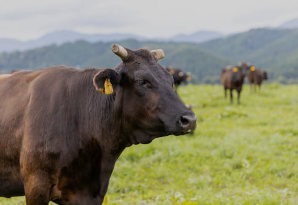
benefits of japenese wagyu
Japanese Wagyu beef offers a range of benefits that distinguish it from other types of beef, both in terms of culinary experience and nutritional profile. These benefits are a result of meticulous breeding, feeding practices, and strict quality control measures unique to Japan.
1. Exceptional Marbling (Intramuscular Fat)
- Wagyu is globally renowned for its high degree of marbling, which contributes to its buttery texture, juiciness, and rich flavor.
- The fat melts at a lower temperature than that of other beef, providing a melt-in-the-mouth sensation that enhances the overall dining experience.
2. Superior Taste and Texture
- The fine, evenly distributed marbling results in tender, succulent meat with a distinct umami flavor.
- Wagyu’s texture is smooth and velvety, often described as being far more refined than conventional beef.
3. Healthier Fat Composition
- Wagyu contains a higher percentage of monounsaturated fats (MUFA) compared to saturated fats.
- It is also rich in oleic acid, a heart-healthy fatty acid also found in olive oil.
- Studies have shown that the MUFA/SFA ratio in Wagyu is favorable, making it a healthier indulgence when consumed in moderation.
4. High Levels of Conjugated Linoleic Acid (CLA)
- Wagyu has elevated levels of CLA, a fatty acid associated with various health benefits, including:
- Potential anti-carcinogenic and anti-inflammatory properties.
- Support for metabolic health and body composition.
5. Rigorous Quality and Safety Standards
- All authentic Japanese Wagyu is subject to strict regulations:
- Traceability: Every animal is tracked from birth to ensure origin and quality. Wilson Creed Waygu are DNA tested and Registered with the American Wagyu Association.
- Husbandry: Wilson Creed Wagyu cattle are raised in low-stress environments, often with personalized care, contributing to superior meat quality.
6. Gourmet and Cultural Value
The prestige associated with Wagyu enhances its value for chefs, restaurants, and gourmet enthusiasts.
Japanese Wagyu is more than food—it’s a cultural experience.
Its production is often likened to artisanal craftsmanship, and it is a symbol of luxury dining around the world.
THE LEGACY
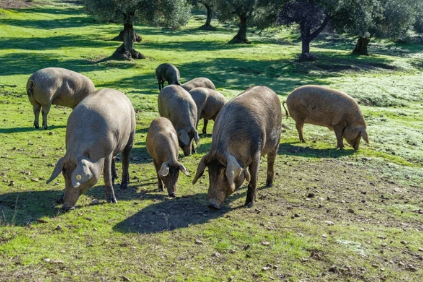
The history of Ibérico pigs is a fascinating narrative of tradition, terroir, and centuries-old agricultural practices. Native to the Iberian Peninsula (encompassing parts of Spain and Portugal), the Ibérico pig is at the heart of one of the world’s most revered culinary delicacies: Jamón Ibérico. Here is an overview of its rich and complex history:
1. Ancient Origins
- The origins of the Ibérico pig trace back thousands of years, with evidence suggesting that its ancestors were domesticated wild boars that roamed the Mediterranean basin.
- These pigs evolved in the southwestern regions of the Iberian Peninsula, particularly in Andalusia, Extremadura, and Salamanca in Spain, and Alentejo in Portugal.
- Over time, the breed adapted to the harsh, arid conditions of the Iberian countryside and the rich oak forests known as the “dehesa.”
2. Development of the Breed
- The breed developed naturally with minimal crossbreeding, resulting in pigs with distinctive physical traits:
- Dark or black skin and hooves (“pata negra”)
- A capacity for storing intramuscular fat, which is key to their flavor and texture
- Farmers favored these pigs for their ability to roam freely, forage for food, and thrive on a diet of acorns, herbs, and roots.
3. The Dehesa Ecosystem
- The dehesa is a traditional agro-silvopastoral system unique to the Iberian Peninsula, characterized by scattered holm and cork oak trees.
- Ibérico pigs have been integrated into this ecosystem for centuries, particularly during the “montanera” season (October to March), when they are finished on acorns (bellotas).
- This symbiotic relationship between the pig and the land is fundamental to the quality of Jamón Ibérico, and is a model of sustainable land management.
4. Culinary and Cultural Significance
- Ibérico pork, especially Jamón Ibérico de Bellota, became highly prized in Spanish and Portuguese cuisine over time.
- By the 18th and 19th centuries, the fame of this delicacy had spread throughout Europe, often associated with royalty and elite gastronomy.
- Today, it remains an integral part of Iberian cultural heritage, with centuries-old curing houses (secaderos) still in operation.
5. Modern Protection and Recognition
- The production of Ibérico ham is now regulated under strict Denominación de Origen Protegida (DOP) and Protected Designation of Origin (PDO) labels.
- The pigs are classified based on their diet and purity of breed:
- 100% Ibérico, acorn-fed (bellota) – the highest quality
- Crossbred or grain-fed variants – still premium but with differences in flavor and fat composition
- Spain and Portugal have enacted laws to protect traditional breeding and feeding methods, ensuring both traceability and authenticity.
6. Global Influence
- A few producers in the U.S. and Latin America have imported Ibérico genetics.
- In recent decades, the fame of Ibérico pork has expanded globally, with top chefs and connoisseurs praising its nutty flavor, rich marbling, and melt-in-your-mouth texture.
benefits of iberico Pork
Consuming Ibérico pork offers several advantages over conventional pork, owing to the breed’s unique genetics, traditional diet, and sustainable rearing practices. Here are the key benefits of eating Ibérico pigs compared to other pig breeds:
1. Superior Flavor and Texture
- Rich, nutty flavor: Ibérico pork—especially from acorn-fed pigs—has a deep, savory taste with subtle sweet and earthy notes due to its natural diet and extensive fat infiltration.
- Exceptional marbling: The meat is naturally marbled with intramuscular fat, resulting in a tender, juicy texture that melts in the mouth, much like premium Wagyu beef.
- Unlike leaner conventional pork, Ibérico cuts retain moisture and flavor during cooking, enhancing culinary versatility and satisfaction.
2. Healthier Fat Composition
- Ibérico pork, particularly from acorn-fed pigs (Jamón Ibérico de Bellota), is remarkably rich in monounsaturated fats, especially oleic acid—the same heart-healthy fat found in olive oil.
- These fats can:
- Help reduce LDL (bad cholesterol)
- Support cardiovascular health
- Increase HDL (good cholesterol)
- Compared to conventional pork, Ibérico pork offers a healthier lipid profile, making it a more desirable option for those concerned with balanced fat consumption.
3. Nutrient Density
- Ibérico pork contains a variety of essential nutrients, including:
- High-quality protein
- Iron, zinc, and selenium
- B vitamins (especially B1, B6, and B12)
- The slow maturation of Ibérico pigs, often raised for 18–36 months (as opposed to 5–6 months for industrial pigs), results in richer meat with greater nutritional complexity.
4. Ethical and Sustainable Farming
- Ibérico pigs are typically raised in free-range environments, especially during the montanera season, where they forage on natural vegetation and acorns in the dehesa woodlands.
- This traditional method:
- Promotes animal welfare
- Reduces reliance on industrial feed and antibiotics
- Supports sustainable land management and biodiversity in rural Iberia
- Consumers who value ethical sourcing and environmental sustainability benefit from supporting the Ibérico system.
5. Culinary Prestige and Experience
- Ibérico pork is considered a gourmet product, often featured in fine dining and luxury culinary experiences.
- Cuts such as presa, secreto, and pluma offer versatile, premium-quality meat ideal for grilling, roasting, or slow cooking.
- Jamón Ibérico, cured over multiple years, delivers an unmatched sensory experience that elevates the perception of pork to an art form.
6. Traceability and Quality Assurance
- Graded according to rigorous PDO/DOP classifications. Spanish and Portuguese laws require strict traceability, genetic verification, and labeling standards. These regulations ensure that the product you consume is:
- Authentically Ibérico
- Free of additives or harmful processing methods
 Wilson Creed Wagyu